International Dairy Development

Evolving dairy in developing countries

Evolving dairy in developing countries

Arla Foods collaborates in public–private partnerships with governments, NGOs, knowledge institutions and commercial partners in three rapidly growing markets — Nigeria, Bangladesh and Indonesia. The aim is to strengthen local dairy value chains by improving economic viability, supporting local communities and reducing environmental impact.

We sell our products in more than 140 countries around, and we can proudly say that means we’re bringing nutritious dairy to people in many corners of the earth. However, being a global company also means that we carry a responsibility to support the development of the dairy sector internationally. For us, that means supporting the development of dairy sectors that strive to be sustainable from a financial, social and environmental perspective.

Many developing countries have rapidly growing populations and economies, which creates a demand for more nutritious food. At the same time, unstable weather and droughts caused by climate change are significant challenges for dairy farmers and the need to make the industry more sustainable is clear. Dairy can play a key role in providing nutrition for people around the world and improving livelihoods for millions of farmers, but environmental sustainability must be taken into account. Sharing knowledge on how to run dairy farms and dairies, with a focus on product quality and improving practices across the dairy value chain, can support local farmers and contribute to the development of the dairy sector. This may also help increase the availability of nutritious and affordable dairy products.

Our main focus is on Nigeria, Bangladesh and Indonesia, where we are committed to improving the local dairy sector from cow to consumer. Read on to learn what we do to develop dairy in those countries.

Supporting more resilient dairy farming in Nigeria

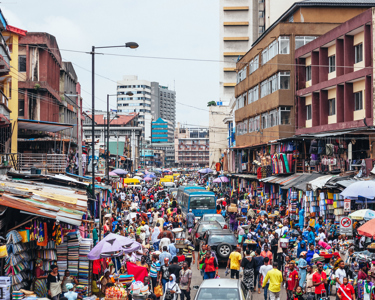
Nigeria is among the fastest growing nations in the world. Its population is set to reach close to 400 million people by 2050 and there is a fast growing consumer demand for affordable dairy nutrition in the country. The Nigerian dairy sector is, however, currently only able to supply around 40 per cent of the country’s demand for dairy products, a gap that is expected to grow in line with the growth of its population. Our aim is to support the country’s own dairy industry to improve and grow.

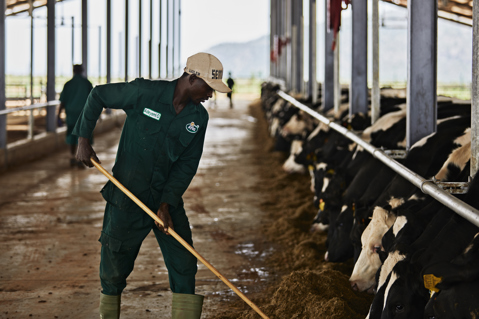
Our farmer owners are spread across seven European countries, but the only Arla-owned farm outside of Europe is in Kaduna State in Nigeria. Our state-of-the-art farm, which was officially opened in 2023, serves as both a fully functioning farm with more than 200 dairy cows and a center for both inspiration and training for local dairy farmers. The aim is to share our expertise in improving milk yield and quality, animal welfare, farm profitability and farming practices.

The farm is one of three pillars in Arla’s commitment to the development of the dairy sector in Nigeria and it both builds on top of and taps into the targets of the other two. The first was The Milky Way Partnership, a public-private partnership with funding from DANIDA. In 2023, the project was succeeded by the Partnership for Green and Productive Dairy in Nigeria. The second pillar is the Damau Household Milk Farm, a public-private partnership with Kaduna state. All our projects in Nigeria share the aim of developing the dairy sector to become more productive, profitable and climate-efficient.
Supporting more resilient dairy farming in Nigeria

Better dairy value chains and empowering women in Bangladesh

As the pioneer of powdered milk in Bangladesh and the market leader, we’ve sold our products in the country since the 1960’s. But growth and sales aren’t our only focus areas in Bangladesh, where a large share of the population are still malnourished, and the female population’s contribution to the economy is undervalued.


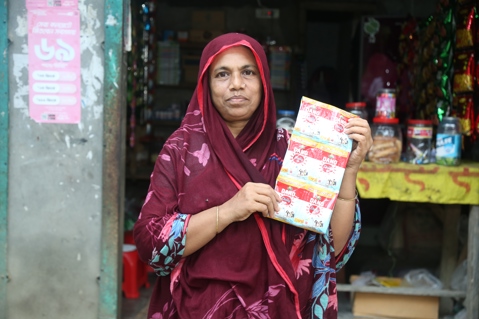
One of the things we do to address these issues is the Pushti Ambassador Partnership. Rural areas in Bangladesh often have limited access to affordable, nutritious food, so the Pushti Ambassadors, a group of female micro-entrepreneurs, act as distributors of our products to those areas, helping people get access to nutritious food while they generate an income for themselves. The project is supported by Danida and is a partnership between Arla Foods and Bopinc, a global expert on distribution to low-income consumers in rural areas.

Another part of the partnership focuses on reducing packaging waste from milk powder sachets. In Bangladesh, used sachets are often disposed of in landfills or through incineration. At Arla, we aim to make our packaging recyclable. As part of this effort, we have simplified the sachet design and partnered with our Bangladeshi packaging supplier, the Dutch NGO BopInc and local waste collectors to pilot a waste collection and recycling initiative. The project explores how collected material from our factory can be processed and reused, for example in products such as furniture and building materials. The ambition is to assess whether this approach can be maintained and potentially expanded to other locations.

The third part of our commitment to Bangladesh’s dairy sector focuses on improving farm profitability while supporting measurable improvements across the value chain. Together with our commercial partner PRAN, local dairy experts, the Bangladesh branch of Solidaridad, SEGES Innovation and the Danish Agriculture & Food Council, the initiative is supported by Danida. The collaboration focuses on sharing practical dairy farming knowledge and methods with local farmers. This includes guidance on animal care, feed optimisation and farm management practices that can contribute to improved animal welfare, increased milk yields and more resource-efficient milk production — supporting farmers in developing more economically viable businesses.

Better dairy value chains and empowering women in Bangladesh

Piloting organic dairy farming in Indonesia

In Indonesia, the demand for dairy is estimated to increase by 6 per cent in 2023. Currently, around 80 per cent of the dairy that’s consumed in the country is imported and there is a growing interest in becoming more self-sustaining. On top of this, the Indonesian government has set specific targets for organic production aiming to increase local organic food production from current approx. 2 per cent to 20 per cent by 2024.

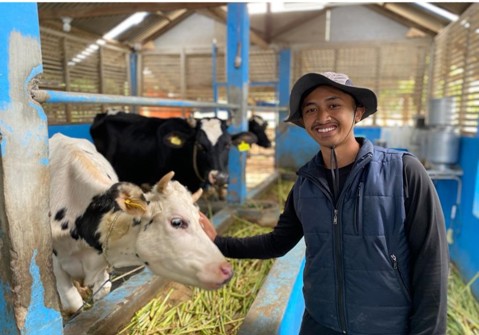
We’ve been part of a project to support Indonesian dairy farmers to transition from conventional to organic and bring more locally produced organic dairy products to the market. Our role has been to contribute with our processing expertise and go-to-market support from our many years of experience as the world's largest organic dairy producer. Organic demo-farms have been established and certified. Training sessions in cow management, barn design, organic feed, use of herbal medicine together with models for conversion costs have been introduced by our Danish and Indonesian partners.

In 2023, the project culminated in a huge milestone for the Indonesian dairy industry, when the first-ever locally produced and certified organic cheese was launched.

Piloting organic dairy farming in Indonesia

Projects in Arla Foods Ingredients

Our subsidiary Arla Foods Ingredients are all about creating nutritious ingredients and products to feed the world's growing population. Like Arla Foods, AFI also partner with dairy value chain actors in developing markets to bring nutrition from milk and whey to people who need it.

Projects in Arla Foods Ingredients