How Arla farmers take action on on-farm emissions

Dairy can be included as part of a balanced diet and contributes to nutrient intake. And, as is the case for all food production, it comes with a carbon cost.

As one of the world's largest dairy cooperatives, we have a great responsibility - and at the same time a great opportunity – to do something about it.  

Since 2020, Arla’s farmer owners have reported year-on-year changes in CO2e emissions. But we're not there yet!

Our target for 2030 is a 30.3 per cent reduction of CO2e emissions from milk and whey from a 2020 baseline.

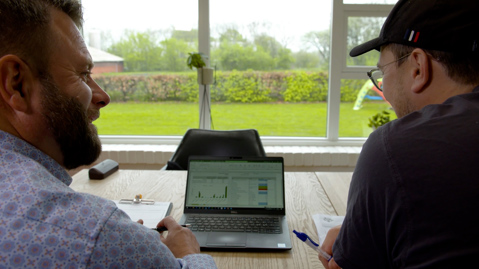
With help from our FarmAhead™ Check, our farmer owners can access data and guidance to support the identification of actions related to emissions on their farms.

Read on to find out how.
Data-driven climate action

In Arla, we have one of the world’s largest externally validated climate data sets from dairy farms.

Approximately 95% of Arla farmers across seven European countries have assessed and submitted data through our FarmAhead™ Check tool covering areas such as herd management, feed production and energy use.

Their data has been verified by an external climate advisor, who has also helped create a personalised action plan for the farmer to further climate reductions based on their individual data. Greenhouse gas emissions vary between farms, and data from different farm types can be used to identify practices that may be relevant for reducing emissions.

Based on this dataset, five key action areas have been identified that farmers can work with in relation to greenhouse gas emissions.

You can read a lot more about them below.

Data-driven climate action
THE BIG 5

5 key climate actions on farm

More milk per feed
More milk per feed

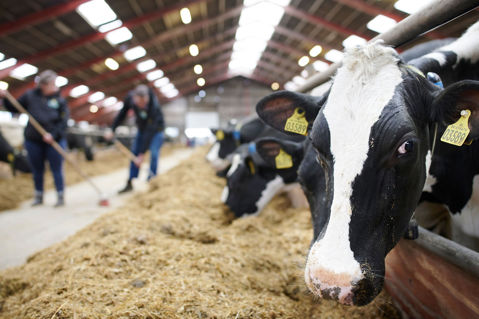
A cow’s feed has a significant influence on milk production. Optimising the ratio between feed and milk output can support more efficient use of feed and help reduce feed waste. This may also be associated with lower greenhouse gas emissions per unit of milk produced.

Feeding precise protein amounts

Cows require protein for maintenance and milk production, but excess protein is excreted. Adjusting feed to align with appropriate protein levels can reduce nitrogen excretion in manure, which may influence greenhouse gas emissions.

Cow health
Cow health

Cows that live a long and healthy life will produce more milk over their lifetime. A longer productive lifespan contribute to more efficient milk production over time. This may also be associated with lower greenhouse gas emissions per unit of milk produced.

Just the right amount of fertiliser

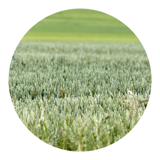
Fertilisers are used to support crop growth, but their use is also associated with greenhouse gas emissions. Adjusting fertiliser application to match crop requirements, and using different application methods, can support crop yields while helping to manage emissions associated with fertiliser use.

Better feed crop yield

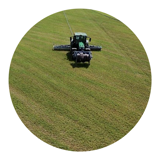
A lot of our farmer owners produce feed for their cows, which is great, because imported feed – for example soy from South America – carries a higher carbon footprint. Therefore, feed yield can also be optimised to support more efficient use of resources on farm.

Our full climate catalogue, which you can download free of charge here, contains 20 concrete actions for dairy farmers who want to become more climate efficient.

Download Arla's full climate action catalogue
Our 2030 climate ambition

30.3% reduction of CO2e emissions from milk and whey by 2030

Rewarding farmers for climate activities

From August 2023, Arla farmers who are taking action to reduce their carbon footprint will be rewarded through FarmAhead™ Incentive.

Together with our farmer owners, we’ve committed to reducing CO2e emissions from milk and whey by 30.3% by 2030. Rewarding farmers for their climate activities is an important milestone towards accelerating CO2e reductions on farm.

In total, 500 million euro will be earmarked to motivating and rewarding Arla farmers for their climate action.

Rewarding farmers for climate activities

How we measure the carbon footprint of dairy farming

Arla’s FarmAhead™ Check is a tool developed specifically for our cooperative farmer owners to identify their carbon footprint and reduce emissions from dairy farming effectively.  

The farmers submit data about their:

  • Feed composition
  • Use of fertilizer
  • Number of animals
  • Manure handling
  • Crop production
  • Use of electricity, fuel and renewable energy

FarmAhead™ Checks are done every year and enable the farmers to follow their own progression and to benchmark against data from other Arla farms. 

The insights from the compiled data is also shared with politicians, research partners and industry stakeholders to help drive an effective transition for the whole dairy industry.

How Arla’s Climate Checks work